Portraying Martha Washington: A Q&A with Katharine Pittman (’07)
By Erin Marlow, Communications Specialist in the Office of the Dean of the College
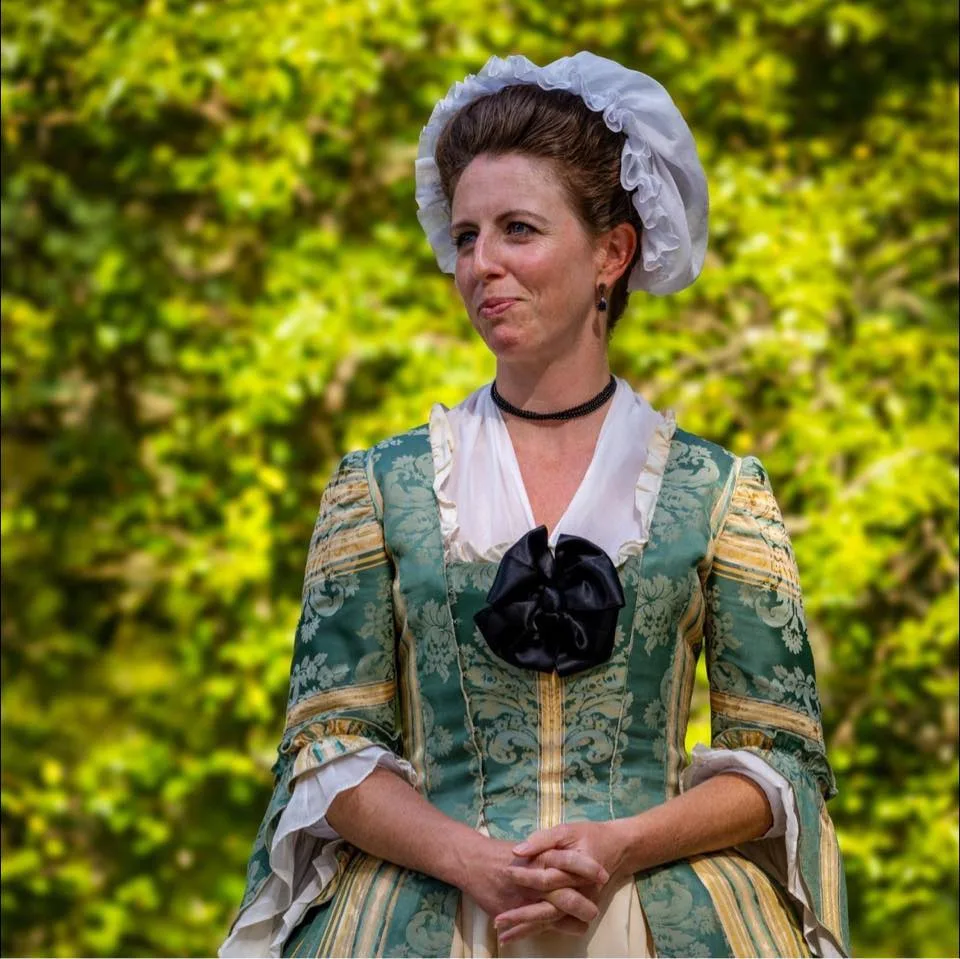
As the United States approaches its 250th anniversary, Wake Forest alumna Katharine McEnery Pittman (‘07) finds herself at the center of the national celebration. A former theatre major and history minor, Katharine portrays Martha Washington in Colonial Williamsburg — and this Fourth of July, she will be featured on CNN, Good Morning America, and PBS.
The Dean’s Office spoke with Katharine about her historical interpretation of the founding figure and the lessons she has carried with her, from Scales Fine Arts Center to the cobblestone streets of Williamsburg.
As a theatre major and history minor, did you ever envision yourself using your expertise to become a historical interpreter? How do you think your experiences in Wake Forest’s theatre department prepared you for your role as Martha Washington?
Admittedly, as I moved throughout my college career, the profession of historical interpretation never once crossed my mind! I grew up going to Colonial Williamsburg. My parents were history buffs, and being from Raleigh meant that Williamsburg was a quick hop up. I loved the museum and how they approached teaching history, but this craft didn’t occur to me.
Wake Forest prepared me beautifully for this career by ensuring that all majors receive a well-rounded, balanced understanding of the theatre. We were encouraged not only to perform but also to explore all the design and technical elements of a production, with the expectation that we would put them into practice. This work encouraged me to appreciate the entire process of a show.
As part of that education, I learned skills I use daily in my exploration and research into the life of Martha Washington. Historical research and preparing to perform a role share similarities, particularly in the preparation. In the theatre, every character works under a set of “given circumstances” — those facts that a character cannot deviate from within their world. In history, we call those primary sources, or fact-based history. Martha Washington has 71 years of “given circumstances,” and my job now is to research, understand, and interpret them for a modern audience without inventing.
What has sustained or deepened your interest in portraying Martha over the years? Are there aspects of her life or personality that genuinely surprised you in your research?
I had the privilege of beginning my work on Martha Washington by focusing on her early years. She was born and raised 30 miles from Williamsburg and spent many of her younger years in and around the capital city. I had the chance to meet her, not as the first First Lady or the General’s Wife, but as herself — unaffected by public duty.
I have now researched her for more than 10 years, and in the course of that research, I have lived life alongside her. I have gotten married, had children, moved, and increased my job expectations (and visibility). It is rare for a performer to have the opportunity to spend one year, let alone 10 or even more, researching and portraying their character. History often affords us a snapshot of who these people are, frozen in whichever moment is being studied. I have gotten to walk alongside her and realized that she is as human as we are today. She experienced loss, joy, and fear, just like the rest of us.
Through my research, I have had the privilege of re-evaluating how history (and historians) have treated her throughout the years. She has a fun personality; she is extremely loyal (and will cut someone out of her life if she deems them unworthy); she didn’t like being left alone; she cared about her children and grandchildren. She is as 3-dimensional as we all are.
Can you say a bit about your involvement in the festivities for the 250th anniversary?
The Colonial Williamsburg Foundation has joined museums and historic institutes all across the country in the lead-up to the 250th anniversary of our country. For our museum, we have spent the last three years producing large-scale events to commemorate and educate visitors about Williamsburg moments that shaped the national dialogue.
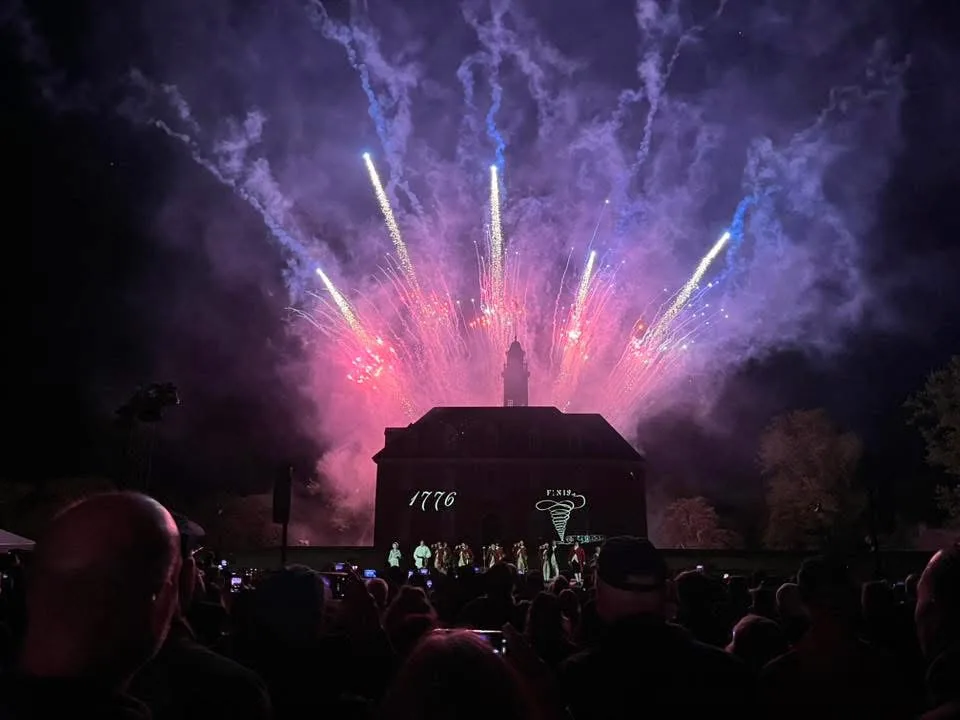
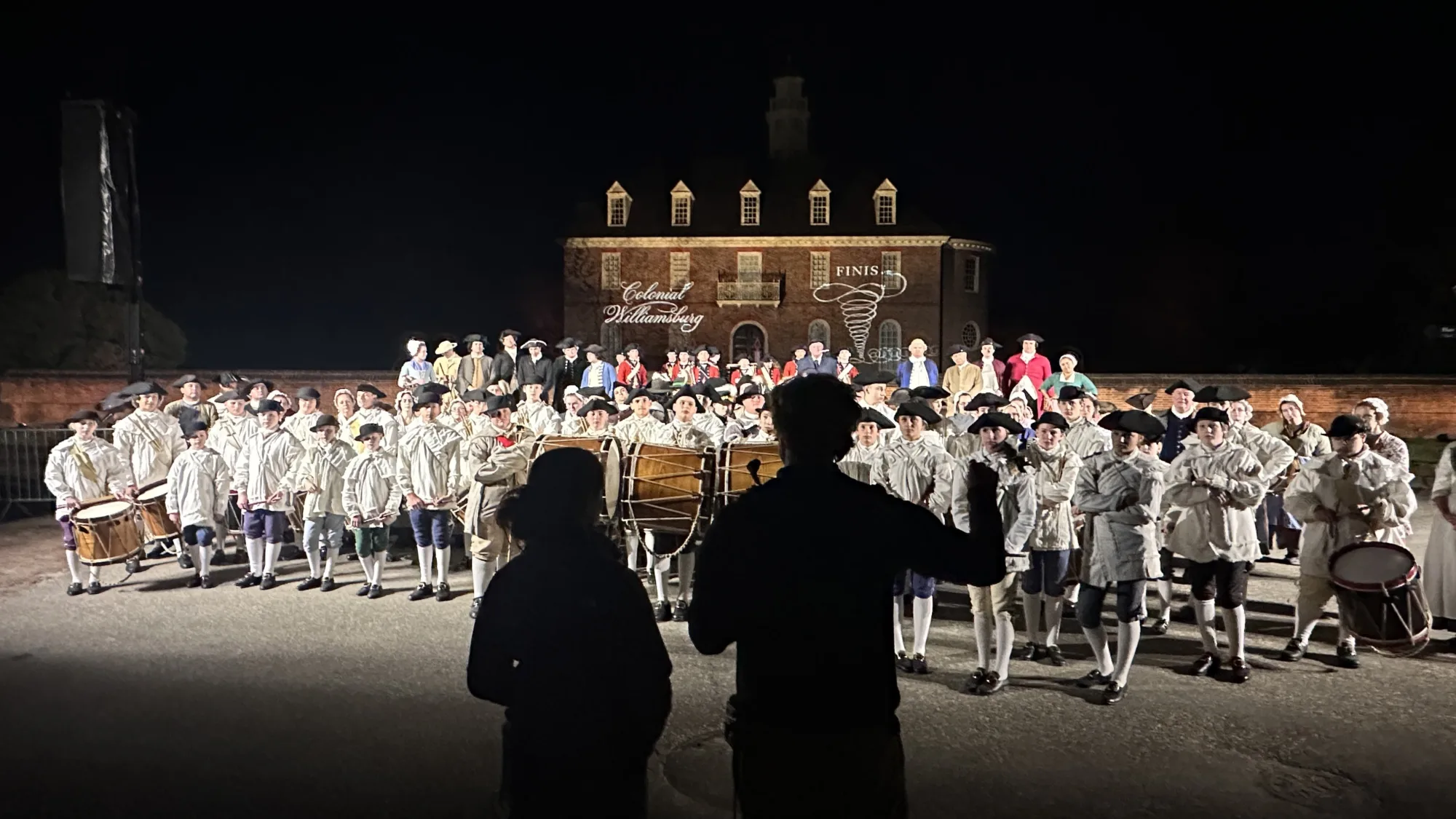
In 2024, my colleague Kurt Smith (who portrays Thomas Jefferson) and I co-wrote and directed A Shock of Electricity, which focused on the dissolution of the House of Burgesses that led to the call for the first Continental Congress. Last year (2025), we wrote and directed the Anniversary Gunpowder Incident, Williamsburg’s version of Lexington and Concord, in which public gunpowder was taken from the Powder Magazine in the dead of night by the last Royal Governor, Lord Dunmore. This year, we wrote and directed Flame of Revolution, focused on the 5th Virginia Convention’s resolve for independence. That resolve was then sent to Congress, compelling the Committee of Five to begin work on the Declaration of Independence. In addition to directing those events, we have written, directed, and produced all the digital features that will be seen throughout the PBS National broadcast of the July 4 celebration at Colonial Williamsburg.
As we approach the country’s 250th anniversary, has the milestone changed how you interpret Martha? Do you find yourself reflecting on or emphasizing particular aspects of her story?
This year, I have made it my personal challenge to maintain a real-time timeline with Martha Washington about what she was up to in 1776. This means that I follow her journey throughout the year. So, if it is June 29 today, I would interpret what she was doing on June 29, 1776. That year was a year of change — not only for the country, but for the Washingtons as well.
She began that year in Cambridge, Massachusetts, attending the first winter encampment of the Revolutionary War (she would then go on to attend every single one of the war). From there, she went to Philadelphia, where she received her smallpox inoculation. She then continued her journey toward becoming the public figure we remember 250 years later. Keeping her in the present time not only allows me to examine the emotional journey this year took her on but also forces our guests to realize that this entire story is still in its first chapter. History hadn’t been written yet.
Many of our guests have come to Colonial Williamsburg this year in search of answers. Whether it is about our national identity, how we started all of this, what the Founders’ original intentions were, or to reaffirm their already held beliefs. The beauty of my job is that I can take an hour out of their day and make them think about these moments from a human perspective. What was going on in the minds of these individuals at this crucible of America’s story? I feel most successful after a performance if a guest approaches me and says, “I never thought of it that way” or “I didn’t realize she went through that, too.” Seeing yourself in history is vital in understanding not only where we have come from, but also how far we can now go.
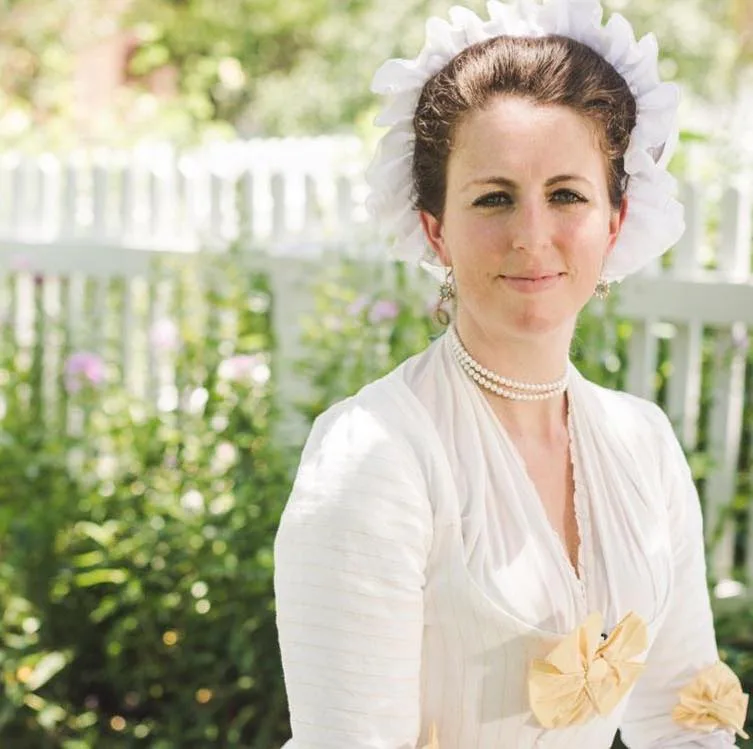
“ Seeing yourself in history is vital in understanding not only where we have come from, but also how far we can now go.”
Katharine Pittman (’07)