
Behind the Book: Q&A with Dr. Derek Lee
By Erin Marlow, Communications Specialist in the Office of the Dean of the College
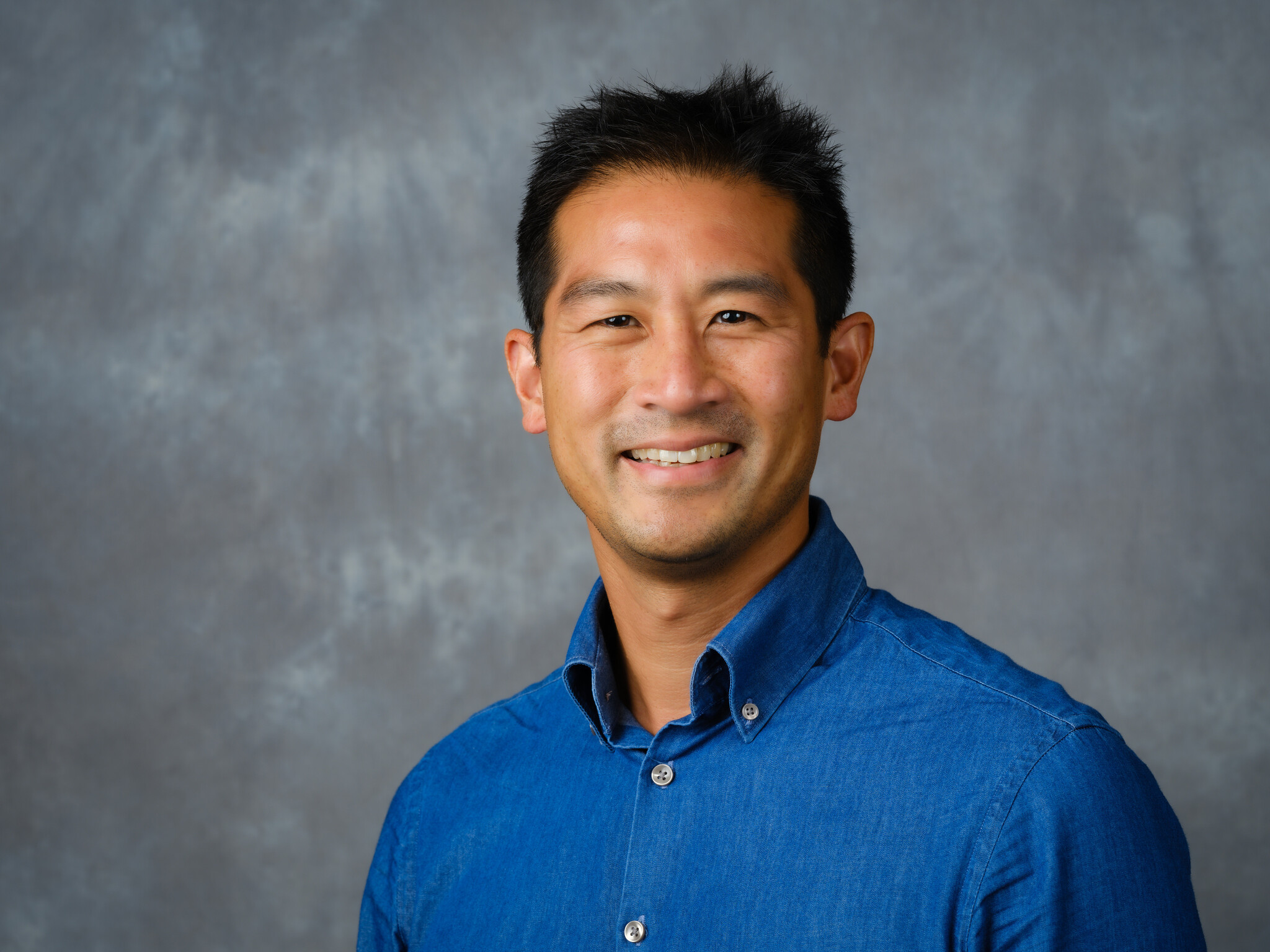
Dr. Derek Lee, Assistant Professor of Literature, published his book Parascientific Revolutions: The Science and Culture of the Paranormal with University of Minnesota Press in August 2025. Inspired by his mother’s ghost stories and his own background in biochemistry, Dr. Lee invites readers to examine how concepts typically dismissed as “pseudoscience” — such as telekinesis, telepathy, and precognition — persist within modern culture. To explore this, Dr. Lee coined the term “parascience,” described as the dynamic space where ideas rejected by mainstream science mix with literary, mythic, and philosophical traditions, as well as microbiology and quantum physics. Dr. Lee argues that neglected sciences are not merely intellectual dead ends but generative sites for new scholarly and creative work.
Dr. Lee spoke with the Dean’s Office about his research process and the inspiration behind the book.
What inspired you to write this book?
One source of inspiration was my mother’s ghost stories. She grew up in Rangoon, Burma, and from a very young age, I heard about the various spirits that lived in her house: what they looked like, why they were there, what they wanted. These stories were very different from the ones I encountered in American movies and books, so early on I was intrigued by ghosts, ghost stories, and the variable cultural contexts where they appeared. The second source of inspiration was a class I took on James Joyce. During my second year of graduate school, I chanced upon an article claiming that the most famous chapter in Ulysses was actually a telepathic mental exchange between two characters inspired by the Society for Psychical Research (SPR). I’d never heard of the SPR before, so I began digging into it. I was completely blown away to learn it was a scientific organization that studied haunted houses, telepathy, prophetic dreams, and other unexplainable phenomena. As a biochemistry major in college and a former science writer, I immediately knew I wanted to do my dissertation on “supernatural science.” Parascientific Revolutions grew out of these episodes. My book explores how the paranormal evolved as it encountered new sciences like quantum physics and microbiology, while also moving into new literary genres like science fiction and ethnic fiction.
What was a major challenge that you faced in your writing and research process?
Early on, the biggest challenge was tackling a topic that is considered pseudoscientific and therefore off-limits for scholarship. The common assumption is that paranormal phenomena like telekinesis and precognition don’t really exist, so why would you research it? In my home field of science studies, it’s much easier — and safer — to work in an established area like climate change literature, especially if you’re a young scholar. Fortunately, the paranormal seems to pique most everybody’s attention. Practically everyone knows someone who has seen a ghost. There is also an enormous amount of paranormal literature out there that hasn’t been written about. For example, one of my book chapters is on the Stargate Project, a top-secret US government program that trained “psychic soldiers” to spy on Cold War targets using a new type of long-range clairvoyance called remote viewing. I found original copies of the Project Stargate training manuals in a library archive, and the scientific principles used to explain remote viewing are simultaneously rigorous and absurd. When people learn about these hidden scientific and military histories, they get very excited, which is affirming as a scholar.
What would you say is your project’s unique contribution to the field? Larger society?
The major contribution of the book is a new term that I call parascience, which describes the realm of knowledge outside mainstream science where rejected ideas reside. Instead of being an intellectual graveyard, I view parascience as a dynamic space where new research developments, literature, and myth can revive “bad” science. Parascience helps to explain how and why pseudoscientific ideas keep circulating through modern culture despite all attempts to discredit them. On a broader level, Parascientific Revolutions argues that the academy can and should look toward forgotten and neglected sciences as generative sites for future research.
Do you involve students in your research? How do you bring your work or writing practice into the classroom?
Some of my research methods filter down into my teaching. For instance, I teach a 100-level English class called The Ghost, which covers famous literary ghosts from the 1600s to the present. One of my major projects asks students to research and retell a ghost story from their hometown. Something I know from my own scholarship is that things like ghosts and remote viewing are historically situated, so I have my students consider where their ghost stories take place, what was happening culturally and politically at the time, and what fears or moral values the ghost invisibly embodies — questions like that. Knowing all of these background details makes a big difference in eliciting stronger research and better ghost stories.
What’s next? Do you see your research evolving for future publications?
I’m currently working on two book projects. My research portfolio also includes Asian American literature and graphic novels, so my next book is on Asian American superheroes and supervillains. The other book project builds off Parascientific Revolutions and explores a different side of parascience through conspiracy theories and conspiracy fiction. I’m thinking of developing a new class on conspiracy theories, so if anyone can recommend short stories or novels about Bigfoot, UFOs, or government coverups, send me an email!
Parascientific Revolutions: The Science and Culture of the Paranormal
Parascience helps to explain how and why pseudoscientific ideas keep circulating through modern culture despite all attempts to discredit them. On a broader level, Parascientific Revolutions argues that the academy can and should look toward forgotten and neglected sciences as generative sites for future research.
Dr. Derek Lee