
Behind the Book: Q&A with Dr. Melissa Maffeo
By Erin Marlow, Communications Specialist in the Office of the Dean of the College
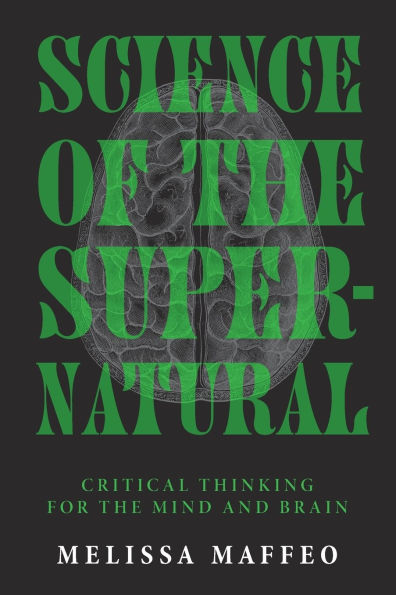
Dr. Melissa Maffeo, Associate Teaching Professor of Psychology, has always been intrigued by the things we can’t quite explain — and the science behind why we experience them. In her new book, Science of the Supernatural, published with Cambridge University Press in March 2026, Dr. Maffeo blends research and storytelling to explore eerie phenomena through the lens of neuroscience and psychology. Diving into experiences such as sleep paralysis, false memories, and psychic readings, Science of the Supernatural invites readers to explore how the brain shapes belief.
Dr. Maffeo spoke with the Dean’s Office about the inspiration behind the book and how anomalistic psychology offers rich opportunities for critical thinking in the classroom.
What inspired you to write this book?
I’ve always been in love with the horror genre and the supernatural. For as long as I can remember, I was telling ghost stories, watching The X-Files, and reading Stephen King. As an adult, I learned that there is a lot of scientific research that explores why and how people might have a weird sensation or experience and label it “paranormal.” Science can’t prove the existence or nonexistence of the paranormal, but it can offer interesting explanations for why someone might believe they saw a ghost. Once I learned about that science, I had to do more. I love storytelling, so I really wanted to tell these stories.
What was a major challenge that you faced in your writing and research process?
Probaby time! Both because it was hard to dedicate as much time to the project as I would have liked and because I could have kept writing forever. It would have been easy to have doubled the length of this book.
What would you say is your project’s unique contribution to the field? Larger society?
Studying anomalistic psychology is a pretty niche field, and there are not a lot of people who do it. Writing this book helps get some of that research out in the open. Also, this book is written for anyone interested in the science of the supernatural. It would make a good adjunctive text for a psychology or neuroscience course or a course on critical thinking or skepticism. It’s also appropriate for a non-scientist, so I hope it helps to remind people that their perception is not always other people’s reality. It’s a reminder to be humble, to keep an open mind, and to remember that your experiences are unique to you.
Do you involve students in your research? How do you bring your work or writing practice into the classroom?
I weave the supernatural into many of the classes I teach. This works really well in Introductory Psychology. Every pillar of psychology can be taught through the lens of the supernatural, offering a unique way to introduce the field of psychology to students. In doing so, students can make connections between the course concepts and examples that they probably don’t encounter in most of their other classes. In the social psychology unit, for example, we discuss how psychics are some of the best psychologists out there. They use their own “tricks” to tell the future — Barnum statements, illusory correlations, charisma, and reading very subtle body language. They also know exactly how to take advantage of the biases and heuristics held by their clients — confirmation bias, suggestion, priming, poor probabilistic reasoning, and the strong desire to believe. The students are learning psychology, just in a nontraditional way.
What’s next? Do you see your research evolving for future publications?
I would love to start researching another book! But really, one of my deepest ambitions is to experience something that I can’t explain. People have told me amazing stories about their experiences with the supernatural, and I always wonder what I would think if I experienced that same thing. I’ve visited psychics, some reportedly very haunted places, and I’ve even tagged along on paranormal investigations. I’ve even been told that my own house might have a ghost! So far, though, I haven’t had any experiences. Like Mulder, I want to believe.
Science of the Supernatural
Every pillar of psychology can be taught through the lens of the supernatural, offering a unique way to introduce the field of psychology to students. In doing so, students can make connections between the course concepts and examples that they probably don’t encounter in most of their other classes.
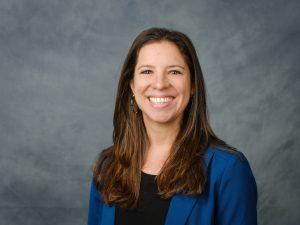
Dr. Melissa Maffeo